Famous Group :Iga
伊賀衆 Iga ninja
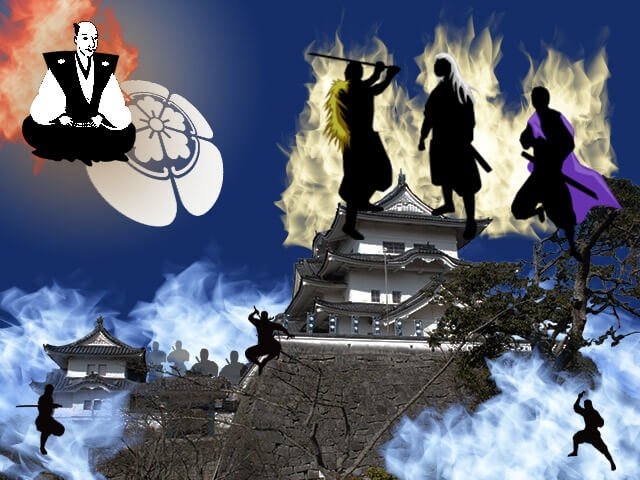
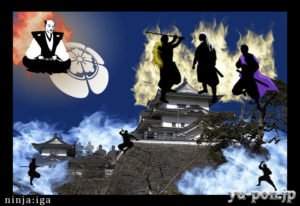
Iga Ueno City is situated in a mountainous region, 50 km in a straight line and 66 km along the highway from Kyoto. According to folklore, people from overseas—especially from China and Korea—migrated to the Iga and Koka areas.
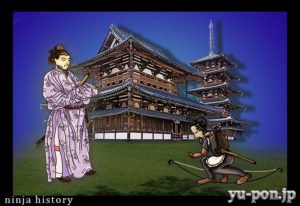
The land in these regions was highly infertile and belonged to the private estates of Kōfuku-ji and Tōdai-ji, both of which were established during the Nara period and are now famous World Heritage sites.
To support the reconstruction of these temples, local residents worked to supply lumber, strengthening their regional connections.
Additionally, these areas were well known as imperial hunting grounds and locations for plant collection.
The people of this area formed a unique and independent local community called Sokoku, where a united group of rice farmers and country samurai governed themselves without a feudal lord by repelling external enemies. The Iga Ninja system was divided into three classes: Upper-class Ninja (Jōnin), Middle-class Ninja (Chūnin), and Lower-class Ninja (Genin). Jōnin oversaw Chūnin and Genin and were led by three prominent Jōnin families: Momochi, Fujibayashi, and Hattori.

They made a living by operating a ninja staffing agency, fulfilling requests from various daimyō across the country.
The Jōnin families took in Genin’s children and selected farmers’ children from a larger pool, subjecting them to rigorous ninja training before dispatching them to different domains to serve daimyō.
This ninja training was even harsher than that of Olympic medalists, beginning at around 3 to 4 years old. Only a few Genin managed to complete and survive the training.
The tasks requested by daimyō for ninja work were as follows: Before a battle, ninjas gathered information on marching routes, including roadmaps, distances, potential hazards, the feasibility of passage for large armies, and defensive positions of castles. They also identified well locations and assessed reserved rice quantities.
During battle, ninjas engaged in guerrilla warfare tactics, conducted night attacks, and infiltrated enemy castles to weaken their forces.
Wakayama Prefecture lies west of Mie Prefecture. It is well known as a region of Sokoku and home to the Saika group, which also prospered through foreign trade.
Guns were first introduced to Tanegashima, Japan, in September 1543.
The Negoro group, which dominated the South-West area of the Kii Peninsula as part of Sokoku, trained in gunsmithing and eventually began manufacturing firearms.
The Saika group, which was able to import gunpowder from abroad, became a well-known mercenary force armed with firearms and later allied with the Negoro group. The same development occurred in Iga and Koka; in particular, Koka incorporated firearms skills into ninja arts, while Iga developed its original ninja techniques using gunpowder.
The Iga group also had mercenary forces armed with firearms and remained invincible for a time. This group nearly defeated the Oda army and Oda Nobunaga in the battle at Mount Hiei Temple. However, after this, the Iga region was invaded and completely crushed by the Oda army.
Tokugawa Ieyasu, the founder of the Edo government, recognized the true talent of ninjas, so he employed Jōnin-class ninjas from the Hattori family. His life was saved during the Honnō-ji Incident by the ninja Hattori, who arranged a safe escape route from Iiyama, near Kyoto, through the perilous Iga Mountains. With assistance from the Iga and Koka ninja groups, Ieyasu managed to cross the mountains and reach Shirako Beach, where he took a boat back to his home in Suruga (now Shizuoka).”This famous escape plan is known as ‘Iga-goe.’
After establishing control over Japan, Ieyasu incorporated many ninjas from Iga and Koka into the Tokugawa government as vassals.