Famous Group :Togakushi
戸隠 Togakushi(Togakure)&Sanada school
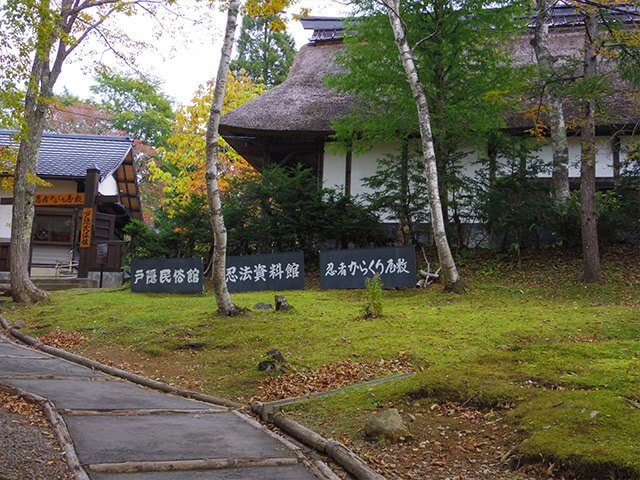

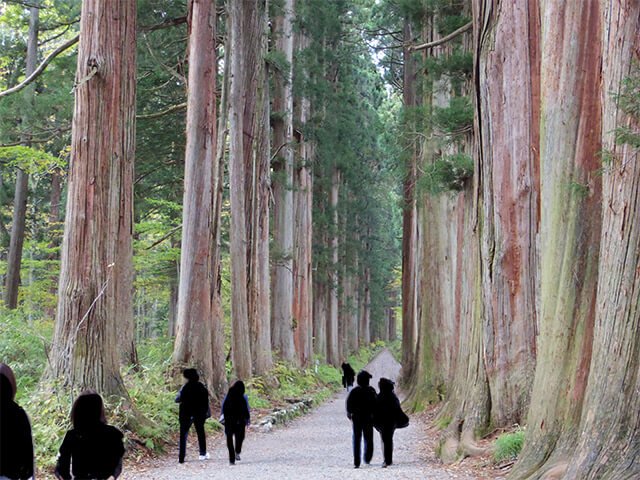
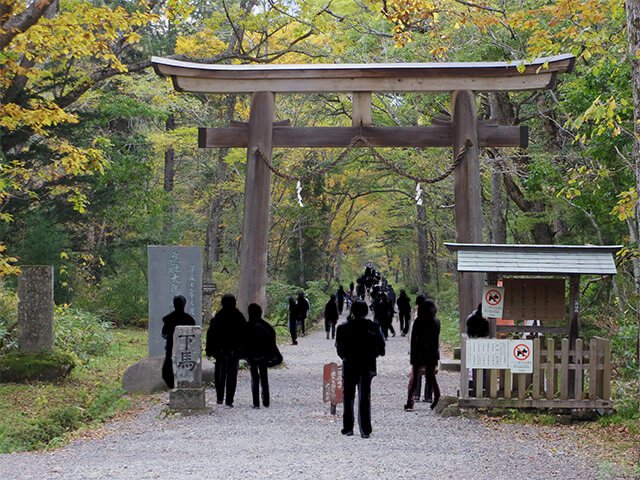
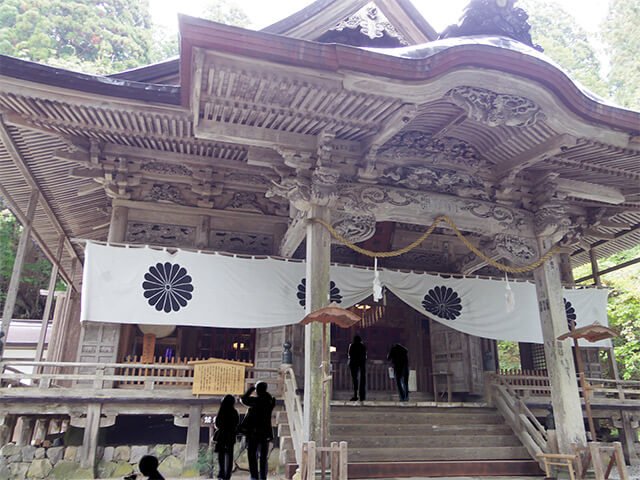

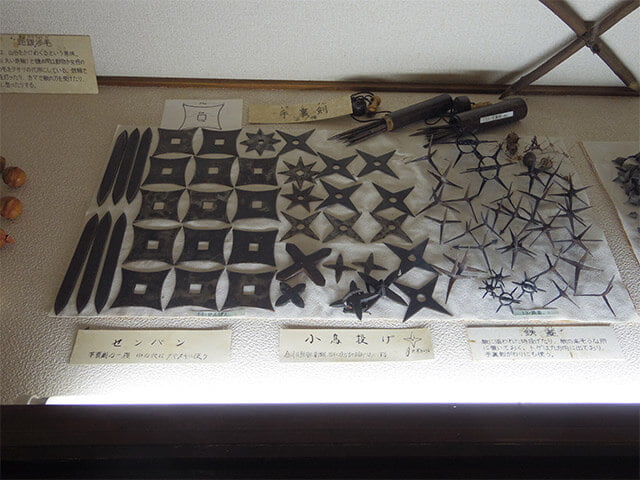
The ninja arts of the Togakushi (Togakure) school were originally developed in conjunction with Shugendō practices. Later, many daimyōs in the Kantō and Kōshin’etsu regions hired ninjas from the Togakushi school. Among them, Takeda Shingen of Kai Province (modern-day Yamanashi Prefecture) formed the strongest army of the Sengoku period by employing Suppa or Rappa units, which were composed of Togakushi school ninjas.
The terms Suppa and Rappa are different from the designation used in Iga and Kōka, where ninjas are referred to as Shinobi. The first character of the word ‘ninja’ (忍者), ‘忍’ (Nin), is composed of the character for ‘heart’ placed beneath the blade of a sword. This symbolizes a key principle of ninja discipline—that a ninja must always maintain a calm and steady mind in order to carry out their mission. As for the meaning of Suppa, it refers to the act of exposing an enemy’s confidential information.
In other words, it refers to the act of obtaining the enemy’s intelligence. The title given to a ninja from the Togakushi (Togakure) school was likely a practical designation assigned by the daimyō who hired them.
Togakushi Shrine has long played a central role in the Togakushi area. According to legend, in the mid-800s AD, a Buddhist monk named Gakumon used the power of the Lotus Sutra to seal a demon with nine heads and nine tails inside a cave, blocking the entrance with rocks.
From this legend, we can infer that Mount Togakushi was regarded as sacred ground for mountain worship, rooted in a blend of Tendai and Shingon esoteric Buddhism—two of the oldest Buddhist traditions in Japan—since the beginning of the Heian period. It is said that Togakushi was considered a holy site on par with Mount Hiei and Mount Yoshino, and that up to three thousand pilgrims were regularly accommodated there.
The founder of this school is said to be Daisuke Nishina, who practiced Shugendō at Mount Togakushi. He served Kiso Yoshinaka, a leader of the Genji clan in the Kiso region, near the end of the Heian period. As a result, the leaders of ninja groups under Takeda Shingen were often drawn from warrior monks trained in Shugendō. After the Takeda clan was defeated by Oda Nobunaga, the Sanada family inherited and led Takeda’s ninja organization.
The Shigeno clan was a powerful family in the Shinano region (present-day Nagano Prefecture), consisting of three branches: the Unno, Nezu, and Mochizuki families. The Sanada family originated from the Mochizuki branch. This Mochizuki family traced its lineage back to the main Mochizuki clan, which was the head of the Kōka ninja group. Due to their familial ties, the two Mochizuki lines often exchanged ninja techniques and knowledge.

A famous female ninja group called Nonou (ののう), also known as Kunoichi, was organized by Mochizuki Chiyome. She was from the Mochizuki family of Kōka and was ordered by Takeda Shingen to marry into the Shigeno Mochizuki family.
Mount Iizuna, located next to Mount Togakushi, was also a well-known sacred site for Shugendō, where the deity Iizuna Gongen was enshrined. It is associated with a legend involving a goblin-like figure with a long nose, known in Japan as a Tengu.
Uesugi Kenshin, a prominent daimyō comparable to Takeda Shingen, ruled over the Chūetsu region (present-day Niigata Prefecture). He was a devout follower of the deities Vaiśravaṇa (Bishamonten, Guardian God of Buddhism), Marici (a Buddhist war deity), and Iizuna Gongen. The front of his war helmet (kabuto) was adorned with a Karasu Tengu (Crow Tengu), a symbol associated with Iizuna Gongen.
Notably, it is said that the ascetic Sennichi Dayu was granted the mystical powers of Iizuna Magic by Iizuna Gongen. This magic involves the use of a creature called Kuda Kitsune—a kind of spirit, often described as a weasel or ferret-sized being, housed in a small tube. ‘Kuda’ means tube, and ‘Kitsune’ refers to a fox, though in this case, it denotes a fox spirit residing within the tube. In Japanese tradition, kitsune are often regarded as mischievous or malevolent spirits, and the Kuda Kitsune is said to be about the size of a weasel or wild mouse.
According to legend, a Kuda Kitsune can possess humans and even lead them to death by draining their spiritual energy. However, when treated with reverence, these spirits can serve as protective familiars, similar to Shikigami in Onmyōdō. The art of using Kuda Kitsune was widely practiced among samurai and ninja as part of their mystical techniques. Naturally, Iizuna Magic also spread to the Kōka region.

Yu-pon just realized a similarity between Iizuna Magic and Balinese Black Magic. When casting a curse, a Black Magician begins the ritual by visiting a secluded forest spring late at night, then channels their consciousness into a small creature before unleashing the spell in Bali. Intriguingly, Iizuna Magic employs similar methods involving small animals.
In Europe, witches and wizards are also said to use small animals in their practices. According to The Denpasar Tribune, a respected newspaper in Bali, mysterious reports surface once or twice a year about Black Magicians dueling with blazing fireballs over rice terraces. If you’re interested in Balinese Black Magic or White Magic, you can find YouTube videos showing villagers falling into trances during local festivals.
What’s Shugendo?
At this point, I’d like to explain about Shugendō.
Can you imagine what agriculture is like in the Togakushi Mountains? Since Togakushi is located deep within the mountains, there is hardly any land suitable for cultivation. Only the mountain priests of Shugendō were able to study and train in the art of ninjutsu.
The founder of Shugendō was En no Gyōja (634–701), who studied Buddhism in his teens and practiced asceticism in the deep mountain valleys of Kinpu in order to receive divine revelations. Finally , he is said to have encountered Zao Gongen—a deity embodying Buddha, Kannon (Guanyin), and Miroku Bosatsu (Maitreya). Zao Gongen, a syncretic figure uniting Buddhist and Shinto elements, was believed to save the world across the past, present, and future—an idea that deeply inspired many followers.
Practitioners of Shugendō are called Yamabushi (mountain priests), who undergo rigorous mental and physical training while walking through mountains and valleys. Yamabushi, having acquired supernatural powers through such training, would emerge from the mountains to perform fire offerings, pray for rain and healing, and respond to the requests of people in need.

The supernatural abilities of En no Gyōja are recorded in the Shoku Nihongi, describing acts such as walking on the sea, levitating, and subduing demons. From 690 to 700, he was exiled to remote Ōshima Island on charges of false wrongdoing. However, he is said to have appeared in what is now the Yamanouchi area of Yamada Town, Iwate Prefecture. There, after performing many magical acts for the villagers, he gave the following advice: ‘You should live on the hilltop so that you can protect yourselves from a tsunami.’
This deed and his words became a village legend. For 1,300 years, the villagers followed his guidance. As a result, during the Great East Japan Earthquake on March 11, 2011, no one in the village died and no homes were damaged. This is a true story—can you believe it?
In the early Shōwa period, there were mountain priests who, as traveling performers, would respond to people’s requests to locate missing persons or lost items. It was said that their answers were often surprisingly accurate.
Yu-pon interprets this as follows: These priests trained deep in the mountains, away from all human contact. It is likely that the harsh conditions of survival and self-restraint demanded not only physical strength but also a sharpened mental focus—perhaps even a kind of sixth sense—which awakened their latent abilities. This experience-based intuition and awareness became foundational to ninja training.