Introduction
Introduction Ninja
Now, there is a boom in Ninja around the world.
In the 1980s, Ninja movies starring Sho Kosugi gained popularity in the U.S. Ninjas also made an appearance in the James Bond film You Only Live Twice. Additionally, the animated TV series Naruto has been distributed to over 90 countries, leaving a lasting impression of Ninja as superhuman and mysterious figures.

Yu-pon was also surprised to see how popular Ninja is in online news.
A report from Iran states that Ninja training halls (dojos) for women are very popular, with over 3,500 women dedicated to intense Ninja training (shugyo). Can you believe it? Yu-pon has never seen a Ninja dojo specifically for women in Japan.
Meanwhile, another news report from the IT industry in the U.S. highlights a trend where many professionals—especially programmers—refer to themselves as ‘Ninja.’ This term, however, has little to do with the Ninja seen in movies. Instead, it conveys that they possess exceptional skills and can accomplish difficult tasks. The trend is now spreading beyond programming to other professions.
However, many Japanese people have little to no knowledge of the true history of Ninja. Their understanding of Ninja mostly comes from childhood cartoons and TV programs, just like people from other countries.
Today, professional Ninja and dedicated Ninja dojos no longer exist. In Japan, there are barely any authentic Ninja dojos—only places like Bujinkan in Kashiwa exist. In other words, true Ninja training facilities are extremely rare, even within Japan itself.
The Guardian, English newspaper introduced
Ninja with many styles as a fictional person who was created with “a little fact” and “a lot of imagination”.
This made Yu-pon reflect on the true nature of Ninja. When traveling in Japan, it is quite difficult to encounter a real Ninja or experience authentic Ninja training, such as that practiced in Iga or Koka, or even those connected to Japan’s traditional mountain worship.
But , Yu-pon hopes to introduce various aspects of Ninja activities, including the physical training of Genin (low-ranking Ninja), their tools and weapons, the moral principles that guide their actions, and their role within society.
Additionally, some elements of Ninja arts have been regarded as mere fantasy. Yu-pon would love to show its excellent magic called Watsuma (Japanese traditional magic) through documentary records.
Yu-pon would love to thank Uncle Nick, my professor in Japanese studies during my study abroad, who gave me lots of advicefor ninja art and etc.
About ninja
Famous Ninja Group
Maniac place
MAP
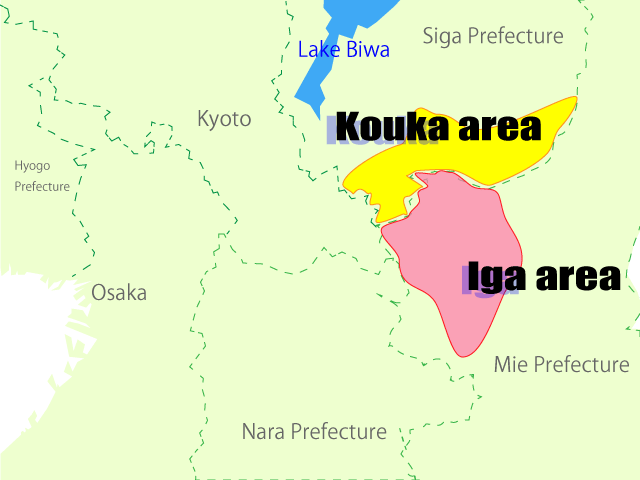
Iga and Koka are roughly in this area.